

Governance
How we make decisions, together
First Unitarian Church of Rochester is a congregational church. That means our members share in shaping the direction of this community. We believe in shared leadership, transparency, and making decisions in ways that reflect our values.
-
The First Unitarian Church of Rochester practices congregational polity, meaning it is a self-governing community.
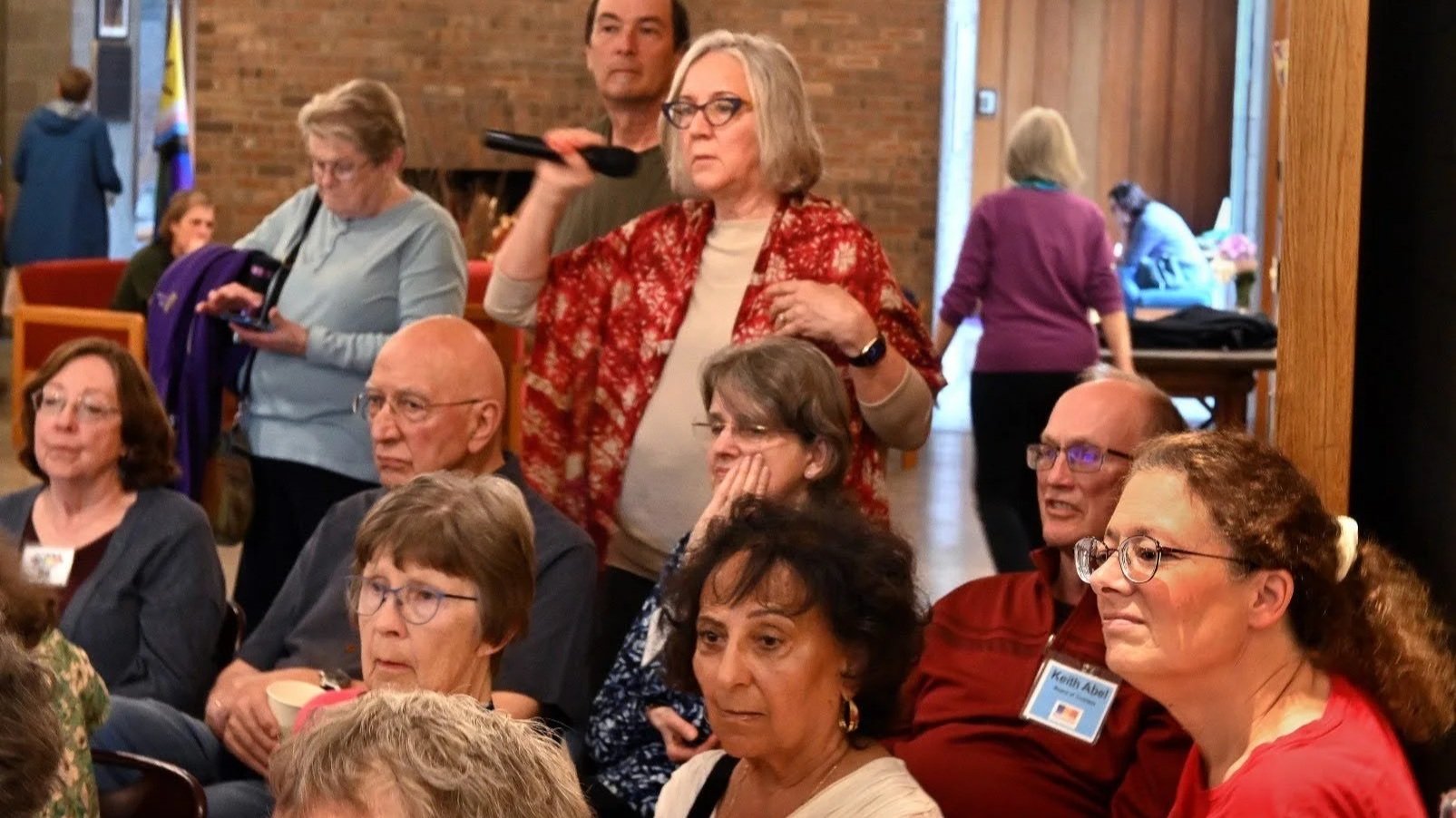
The members of the congregation hold the final authority in how the church is run—including "calling" the Lead Minister by congregational vote.
Together, they elect leaders, approve the budget, and help shape the church’s future.
-
Members meet at least once a year for what’s called a congregational meeting. At these meetings, members:
Vote on the annual budget
Elect leaders to the Board of Trustees
Approve key decisions that affect the church
This democratic approach ensures that everyone’s voice matters and that decisions reflect the shared values of the community.
-
The Board of Trustees acts as the main leadership body. It’s made up of nine elected members plus three officers (President, Treasurer, and Clerk). Each person serves a term, and new members are elected every year to keep ideas and leadership fresh.
The Board focuses on the big picture. Its job is to make sure the church is living out its mission, using its resources responsibly, and staying true to its values.
-
The Lead Minister acts as the executive of the church, working within the boundaries set by the Board to help the congregation live out its mission. Ministers and staff organize worship, support community programs, and care for members’ spiritual and practical needs.
-
Sets goals and policies that guide the church’s work
Approves the annual budget
Oversees finances and property
Evaluates how well the church is meeting its mission
Board meetings are open to church members, except when confidential topics (like personnel or legal matters) are being discussed.
-
The church uses something called policy governance—a simple way of saying that the Board focuses on what needs to be achieved, while staff and ministers decide how to make it happen.
The Board sets goals and boundaries.
The Ministers and Staff decide how best to reach those goals.
This approach helps everyone stay in their lane: the Board leads strategically, and the staff leads operationally. It keeps things clear and efficient, while still being accountable to the congregation.
-
A few roles help keep everything organized:
President: Leads Board meetings and represents the church.
Vice President: Steps in when the President is unavailable.
Treasurer: Keeps track of finances and reports on the church’s financial health.
Clerk: Records meeting minutes and keeps official documents in order.
All of these roles are filled by church members who are elected by the congregation.
-
Committees and volunteer teams support specific areas of church life—like finances, leadership development, worship, or social justice. For example, the Leadership Nominating Committee helps identify members who might serve in key roles. These groups are vital to the church’s success and give everyone a chance to contribute their talents.
Congregational Covenant
What Is a Covenant?
A covenant is the silk that joins Unitarian Universalist congregations, communities, and individuals together in a web of interconnection. As a faith without shared creed, it is the promise to live out our values in community that binds us together.
A covenant is both a noun and a verb. It includes this written agreement of promises to behave in certain ways, and is also the living out of those promises in relationship with one another.
We are always held by our covenant, even when we fail to live up to its aspirations. Unlike a contract, a covenant is not void when broken. Rather, we return to each other and our commitments, and ask “how can we live more faithfully into our shared values?” As Human Beings, we know we will develop, honor, err, and renew this covenant.
First Unitarian Church of Rochester, New York Covenant:
Our mission as members of First Unitarian Church of Rochester is that through spiritual connection in community, we Listen deeply to others and ourselves, Open to wonder and transformation, and Serve together with love and humility. As we live this mission, we value Openness, Belonging, Engagement, Wonder, Justice, Equity, Transformation, Pluralism, Interdependence, Generosity, and at the center of them all – Love. We live out our mission, in alignment with our values, while maintaining mutual respect and care for one another, we covenant to actively listen, remain open, act in service, grow through learning, and seek repair.
With mutual respect and care, and in alignment with our values to live out our mission, we covenant to…
1) Actively Listen
a) With humility, curiosity, and kindness.
b) To understand, more than to react.
c) For the needs underlying what is said.
2)Remain Open
a) To new people, demonstrating radical hospitality and compassion to all who cross our literal and figurative threshold
b) To diversity, recognizing that
differences help us grow.
c) To new possibilities, humbly acknowledging that we don’t know everything.
d) To care and concern expressed by others, admitting that we need one another to survive.
e) To joy, engaging in play across generations to find balance and nourishment.
3)Act in Service
a) Giving of our time, talents, and treasure with creativity, in the spirit of good will, for each other, our church and our community.
b) Joining forces to accomplish more than each of us can alone.
c) Keeping our larger mission and purpose at the center.
d) Living our faith in our actions.
4)Grow through Learning
a) Expanding our knowledge and understanding of the world in its diversity.
b) As a continuous journey rooted in humility and curiosity.
c) Changing internally as well as in relationship with others.
d) Creating space for each other for risk, growth, and transformation.
5) Seek Repair
a) Knowing that conflict is a natural part of community.
b) Addressing breaks in relationship when they occur.
c) Acknowledging harm experienced by others, and ourselves.
d) Developing our own skills in restorative practices